
How Work Stress & Screen Time Are Damaging Your Hair
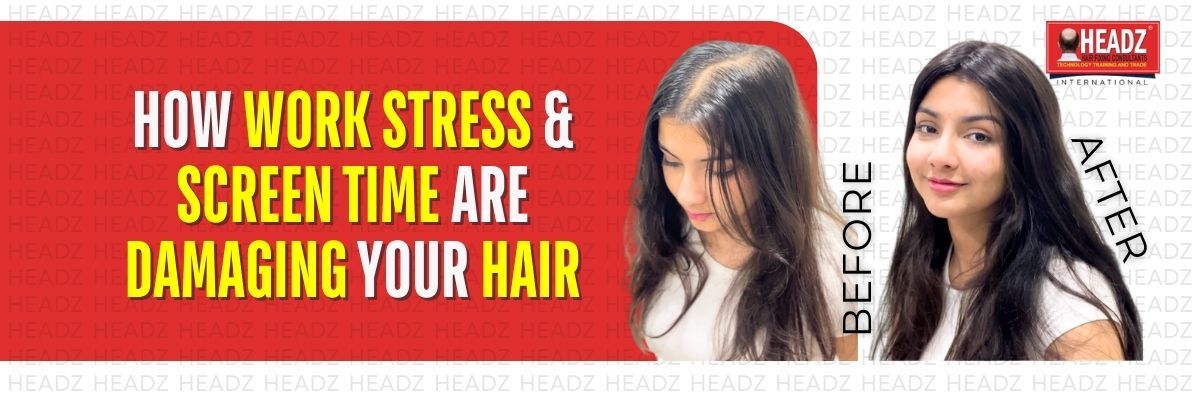
- headz
In today’s fast-paced world, long working hours, constant screen exposure, and stressful lifestyles have become the norm for many professionals, students, and digital natives. While this lifestyle may help you advance in your career or education, it can take a toll on your health — especially your hair health.
Stress and excessive screen time not only impact your sleep and mental well-being but can also accelerate hair thinning, worsen hair fall, and disrupt natural hair growth cycles. If you’re noticing more hair on your pillow, in the shower, or on your comb, it’s not just age — modern life may be playing a role.
In this blog, we’ll explore how work stress and screen time impact your hair, what science says, and what you can do — from lifestyle changes to non-surgical solutions like Headz Hair Fixing.
The Link Between Stress and Hair Loss
1. The Biology of Stress & Hair Growth
Hair cycles through three phases — growth (anagen), rest (telogen), and shedding (catagen). When chronic stress disrupts this cycle, more hairs enter the shedding phase prematurely, leading to noticeable thinning.
This condition is known as telogen effluvium — where a higher percentage of hair prematurely shifts to the shedding stage due to stress hormones.
2. Stress Hormones Affect Scalp Health
Stress increases the levels of cortisol and other hormones that:
✔ Reduce blood flow to hair follicles
✔ Impair essential nutrient delivery
✔ Trigger inflammation on the scalp
All of these can weaken hair roots and speed up loss.
3. Emotional Stress Leads to Unhealthy Habits
Stress often causes changes in lifestyle that further impact hair:
- Poor eating habits due to long work hours
- Irregular sleep patterns
- Increased caffeine intake
- Reduced physical activity
These factors create a chain reaction that culminates in weaker, dull hair.
Screen Time: The Silent Hair Stressor
1. Blue Light Exposure & Scalp Health
Extended screen exposure — from laptops, phones, tablets, and TVs — increases exposure to blue light. Emerging research suggests blue light may:
- Penetrate skin layers
- Increase oxidative stress
- Trigger inflammation
While the full impact on hair is still being studied, early evidence links blue light to cellular stress that can affect hair growth cycles.
2. Poor Posture + Tension + Neck Strain
Working hunched over screens results in:
✔ Neck tension
✔ Reduced blood flow
✔ Increased cortisol release
This reduces scalp circulation, meaning less oxygen and nutrients reach hair follicles, weakening them over time.
3. Disrupted Sleep Patterns
Heavy screen use before bed disrupts melatonin production and sleep cycles. Poor sleep raises cortisol levels — which, as we saw, directly influences hair loss.
How Stress & Screen Time Combine to Affect Hair
When stress and screen dependency are paired, their effects multiply:
- Chronic stress ➜ hormonal imbalance ➜ hair thinning
- Continuous screen exposure ➜ poor circulation & cellular stress
- Poor sleep ➜ delayed hair regeneration
The result? Accelerated hair fall, visible thinning, and reduced hair strength.
Signs Your Hair Is Affected by Stress and Screens
Look out for:
✔ Hair shedding in clumps
✔ Thinning hair around the forehead, temples, or crown
✔ Slow regrowth
✔ Breakage and split ends
✔ Dull, lifeless hair texture
✔ Increased scalp sensitivity
What You Can Do (Daily Lifestyle Changes)
Managing stress and protecting your hair starts with holistic lifestyle adjustments:
1. Reduce Stress Through Mindfulness
- Practice meditation
- Take breaks during work
- Avoid overworking without rest
- Include short walks between screen breaks
2. Improve Sleep Hygiene
- Avoid screens 1 hour before bedtime
- Use blue-light filters after sunset
- Aim for 7–8 hours of quality sleep
3. Healthy Nutrition for Strong Hair
Eat foods rich in:
- Protein (eggs, fish, beans)
- Vitamins A, C, D, E
- Omega-3 fatty acids
- Iron & biotin
4. Keep Your Scalp Healthy
- Regular gentle scalp massage
- Mild, sulfate-free shampoo
- Avoid harsh chemical treatments
5. Take Screen Breaks
Use the 20-20-20 rule:
Every 20 minutes, look at something 20 feet away for 20 seconds.
When to Seek Hair Solutions
If you’ve tried lifestyle changes but still notice:
✔ Persistent hair thinning
✔ Visible scalp
✔ Receding hairline
✔ Patchy hair loss
It may be time to consider professional intervention — like non-surgical hair fixing.
How Headz Hair Fixing Helps
At Headz Hair Fixing, we offer advanced non-surgical solutions that are:
✔ Natural-looking
✔ Lightweight & comfortable
✔ Sweat-proof and daily-wear ready
✔ Fully customised based on your hair type
Whether your hair loss is due to stress, screens, genetics, thinning, or ageing, our systems provide instant results without surgery, pain, or downtime.
FAQs
1. Can stress really cause hair loss?
Yes. Chronic stress can push hair into the shedding (telogen) phase prematurely, leading to hair thinning and fall.
2. Does screen time directly damage hair?
While research is still evolving, prolonged screen exposure can increase oxidative stress and disrupt sleep, both of which contribute to weakened hair health.
3. How long does it take for hair to recover after reducing stress?
Results vary, but many people see improvement in 3–6 months with lifestyle changes and proper hair care.
4. Can non-surgical hair fixing help with stress-related thinning?
Yes. Non-surgical solutions like hair patches provide instant visual coverage and boost confidence while you address underlying causes.
Conclusion
Work stress and excessive screen time are modern lifestyle realities — but their impact on your hair doesn’t have to be. With the right habits, a healthy routine, and professional solutions when needed, you can protect your hair and your confidence.
For tailored non-surgical hair replacement and expert care, visit Headz Hair Fixing — trusted across India, UAE, KSA & UK.